
It’s hard to avoid ads for online gambling platforms these days and that’s a problem. BetMGM, Play 360, Proline, DraftKings, Betway, and Sports Interaction are just a few of the more popular sites available. It wasn’t long ago that sports and gambling weren’t even allowed in the same sentence. Historically, the fear has been that gambling would ruin the unpredictability and excitement of sports matches. Talk to my dad during any sports game and he will try to convince you that EVERYONE is on the take.
In 1921, the baseball commissioner banned eight Chicago White Sox players because it was believed that they threw the “1919 World Series in collusion with sports gamblers.” They were acquitted of the charges but Major League Baseball made sure that its players would not be allowed to gamble until the ruling changed just this year. In 1931, Nevada legalized sports betting, which is why pro sports teams avoided the state for so long. In 1992, the Professional and Amateur Sports Protection Act (PASPA) made it illegal for any state, other than Nevada, to allow sports gambling. Then came 2018. In January, 2018, the American Gaming Association “estimate[d] that Americans will wager approximately $4.76 billion on Super Bowl LII…with $4.6 billion of that amount (97 percent) wagered illegally.” Just five months later, in May of 2018, the Supreme Court struck down PASPA stating that “the law is not consistent with the Constitution.” Today, sports betting is legal in 35 states with many others proposing legalization. Canada followed suit in 2021 with the legalization of sports betting. The Canadian Gaming Association estimates that sports betting is worth $14 billion annually. Nova Scotia was the last province to allow single-event wagers in 2022.
In other words, sports and betting had a very taboo relationship until about five years ago. Then some people made a lot of money. A lot of people lost a lot of money. And, now we’re already starting to see increased legislation around sports betting with the argument that gambling addiction poses a legitimate public health concern.
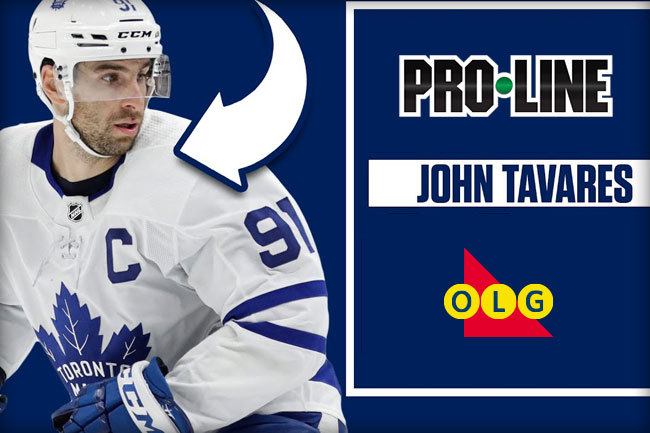
In the UK, between April 2017 and March 2018, 39% of the £14.5 billion in losses recorded were connected to “remote gambling”, which includes sports betting (McGee, 2020). England claims that the “economic burden of harmful gambling has been estimated at about £1.27 billion” (Belloni et al., 2021), but that pales in comparison to the Australian state of Victoria estimating the social cost of gambling at AUD $7 billion (Browne et al., 2017). Connor McDavid, Wayne Gretzky, and Auston Matthews are some of the big name hockey players sponsored by a sports betting site. Even Laura Stacey from the Canadian Women’s National Team has been promoting Proline on her social media account. The “gamblification” of sport has been made possible by changes to government policies and the availability of smart phone apps (McGee, 2020).
Dr. Darragh McGee’s (2020) research has found that gambling and sports spectatorship have become normalized for young men, in particular. Some of his research participants explain:
- “When I was younger, I couldn’t wait to get home from school to see Man United playing in the Champions League…Now, I’m sat there thinking about what I should be betting on tonight.”
- “I don’t think I could go through a Saturday and not gamble on the football anymore.”
Moreover, the ability to gamble so easily from one’s phone facilitates addition, with one participant stating that he couldn’t “imagine physically walking into a bookies and placing five bets back to back but on my phone during in-play, I can place as many as I like…And that’s what makes it a bit more addictive.” Some of the young men interviewed had 15-20 different accounts going at the same time to receive the free bet promotions from different platforms. One participant admitted that he signed up ex-girlfriends in order to create additional accounts to take advantage of the promotions.
The gamification of gambling in addition to the accessibility of mobile applications can lead people to feel like they are in fact playing a game with imaginary consequences: “I came to believe that it was Monopoly money. It was a game. So whenever I was losing, it didn’t feel as if I’d lost because it wasn’t my money. It all felt just didn’t seem real because I never physically had the money in my hands.”
The prevalence of sports betting sites normalizes gambling as a normal everyday activity and researchers liken the prevalence of sports betting advertisements to how tobacco advertising used to operate. Smoking was advertised as cool, normal, and part of an aspirational lifestyle. According to DiFranza et al., (2006) “greater exposure to tobacco advertising has been shown to lead to a greater risk of smoking initiation” (as cited in Thomas et al., 2023). Alcohol advertising also used (and continues to use) these tactics. Thus, public health officials, politicians, and academics are calling for similar legislation on gambling advertising (Thomas et al., 2023). Last year, the UK banned gambling sites from using “advertising featuring top-flight footballers and other sports personalities, as well as reality TV and social media stars, under new rules designed to protect under-18s and other vulnerable groups.”
But, as pro golfer, Phil Mickelson, recently shared on his social media, it’s not only youth who are vulnerable to the accessibility of mobile sports betting:
Most of you will enjoy this football season with moderation while having lots of fun and entertainment. The fantasy leagues will provide banter amongst friends and money won or lost betting won’t affect you. I wont be betting this year because I crossed the line of moderation and into addiction which isn’t any fun at all…After many years of receiving professional help, not gambling, and being in recovery from my addictions, I’m now able to sit still, be present in the moment and live each day with an inner calm and peace. I still have a lot of cleaning up to do with those I love the most but I’m doing it slowly and as best I can. This football season and beyond, enjoy yourself with moderation so it doesn’t detract from your ability to be present. In my experience, the moments with the ones you love will be far more remembered than any bet you win or fantasy league triumph.
@PhilMickelson
The New York Times also reported that during a four year span, Mickelson’s gambling losses totalled over $40 million.
Ontario made a big statement last month when the province announced that, starting February 2024, pro athletes would no longer be allowed to be used in online gambling advertisements. It’s unfortunate for women athletes, like Laura Stacey, who generally have fewer sponsorship opportunities on the whole; however, given that legal sports betting is still fairly new and we are seeing noticeable increases in addiction because of its accessibility, I think this is a good move for Ontario. Hopefully other provinces will follow suit. There is clearly a lot of money to be made in the world of sports gambling but is it worth the cost? If pro hockey players wouldn’t advertise cigarettes in today’s society, should sharing one’s likeness with alcohol or online gambling be socially acceptable?
Works Cited
Bellonia, A., Donaghy, S., Ferguson, B., Knight, J., Melaugh, A., Naughton, W. et al., (2021). Gambling-related harms evidence review: The economic and social cost of harms. Public Health England. https://www.gov.uk/government/publications/gambling-related-harms-evidence-review/gambling-related-harms-evidence-review-summary–2
Browne, M., Greer, N., Armstrong, T., Doran, C., Kinchin, I., Langham, E. et al., (2017). The social cost of gambling to Victoria. Victorian Responsible Gambling Foundation.
DiFranza, J.R., Wellman, R.J., Sargent, J.D., Weitzman, M., Hippie, B.J., & Winickoff, J.P. (2006). Tobacco promotion and the initiation of tobacco use: Assessing the evidence for causality. Paediatrics, 117, e1237-1248.
McGee, D. (2020). On the normalisation of online sports gambling among young adult men in the UK: A public health perspective. Public Health, 184, 89-94.
Thomas, S., van Schalkwyk, M.C.I., Daube, M., Pitt, H., McGee, D., & McKee, M. (2023). Protecting children and young people from contemporary marketing for gambling. Health Promotion International, 38, 1-14.


 Hockey in Society / Hockey dans la société