What do you do with your old hockey sticks? Throw them in a corner? Put them on Facebook marketplace? Hand them down to the younger generation? Upcycle them into some sort of art project? Regardless of your individual choice, hockey sticks have been designed to stay on this planet long after the players who used them have hung up their skates. I recently put a couple of old two-piece hockey sticks on Facebook marketplace for $5 each with zero interest. Unfortunately, there are plenty of hockey sticks on marketplace with not much future left for them.
Enter the folks at Good Wood Hockey who have been trying to figure out how to reduce the number of hockey sticks that end up in the landfill and the amount of money that families have to shell out for new equipment. Good Wood is based in Switzerland and started in June 2023. All of the trees used for their sticks are sourced from Europe. They just launched a new Kickstarter for an adjustable length hockey stick called the Stacky and kindly took a few minutes to answer some of my questions about their products.
Tell us a bit about yourself. How did Good Wood Hockey come to be?
Good Wood Hockey is a team made up of hockey parents, beer league players, and sports marketing experts who all share a deep love for the game and a commitment to making it more accessible and sustainable. The idea for Good Wood Hockey came about when we realized that kids are often only offered composite sticks when they start playing, with prices starting at $70. This struck us as not only a financial burden for families but also an environmental concern, given the waste issue associated with carbon fibre sticks. As we delved deeper, we noticed that except for two large manufacturers, wood stick production had almost entirely vanished from Europe and Canada. Moreover, there had been virtually no innovation in wood sticks for the last two centuries. We saw this as a significant gap—and an opportunity.
How is wood more sustainable than composite materials?
Composite sticks are primarily made from the combination of carbon fibres and epoxy, both of which are fossil-based and require energy-intensive production processes. Alarmingly, about 70% of carbon composite sticks are estimated to end up in landfills, contributing to over 2.5 million sticks discarded annually. This adds up to more than 1,230 tonnes of waste that could take centuries to decompose—if they ever do.
Wood, on the other hand, is a biobased material that is carbon-negative due to photosynthesis and requires less energy to process. However, traditional wood sticks often include fossil-based epoxy and other non-bio-based materials, like ABS in the blade and laminates on the shaft. While wood sticks are more sustainable in terms of selection of material (renewable resources) and less energy intense production, there’s still work to be done to achieve a fully biodegradable product. We’re continually experimenting with alternative bio-based materials to improve our products further.
What are some of the challenges that you have faced in trying to a.) get people to go “backwards” to wood and b.) designing something that can compete with today’s composite sticks?
One of the biggest challenges has been overcoming the perception that wood sticks are heavy and stiff. To address this, we developed our first line of superlight wood sticks—the Featherlight family. These sticks are designed to be 1/3 lighter than traditional wood sticks, with Flex options of 75, 55, 35, and 25. For youth models, our sticks have the same weight as the average composite sticks, making them competitive in terms of performance.
Many players were pleasantly surprised after testing our Featherlight sticks, noting not only the comparable weight but also the unique damping effect that wood provides. This feedback has been encouraging, as it shows that wood sticks appeal to beer league and pond hockey players and has some added benefits, such as a more natural feel and improved puck control.
You seem to have found a niche with 35+ pond hockey players. Do you realistically see high performance hockey players making the switch to wood sticks — or even recreational league players?
Realistically, pure wood sticks may not fully meet the needs of high-performance players due to their lighter weight and specific performance requirements. However, that’s why we’re expanding our scope to include other bio-based materials. A study we conducted with a university in Switzerland showed promising results when applying hybrid-bio fibres on the shaft. Additionally, we’ve been optimizing the shaft’s construction and wood selection to improve durability and weight. We believe this approach could eventually result in performant sticks appealing to a broader group of players.
Tell us about the vision behind the Stacky and how the Kickstarter comes into play?
Kids between the ages of 5-9 grow rapidly, which means their hockey sticks become too short every season—at least once. Often, these sticks are still in perfectly fine condition and could be used for another season if only they were a bit longer. Stacky offers a meaningful alternative to buying a new stick. It’s a plug-in stick extension tailored to fit popular youth hockey stick models, with no glue or heat gun required. It’s super light and provides four different extension options, making it ideal for growing players.
The vision behind Stacky is to help families save money while reducing waste by extending the lifecycle of their hockey sticks. Globally, we estimate that Stacky could save families up to USD 240 million and reduce carbon composite waste by around 650 tonnes over the typical youth hockey lifecycle (ages 5-9).
Kickstarter funds will be used to acquire a high-tech CNC milling machine, made in Switzerland, which will allow us to tailor Stacky precisely to youth hockey sticks and efficiently produce it at scale. We also hope that the Kickstarter campaign will help us reach a broader hockey community beyond our existing customer base in Europe.
Kids here idolize the professional players and they want to play with the gear that the pros use. Canadian hockey parents tend to have a distorted belief that their children will make the NHL and look for any competitive advantage possible. Have you tried to break into the Canadian/American market? Do you have any ideas for how to get consumers here to shift their mindset to environmental sustainability?
The global climate crisis is beginning to materialize in ways that directly impact ice hockey, a sport that has traditionally relied on the predictability of cold weather. We’re already seeing ponds from the Swiss Alps to the thousands of Scandinavia lakes no longer freezing—or freezing for much shorter periods. This natural loss of outdoor ice is just the beginning. Indoor ice rinks are also under pressure, as more energy is required to cool them, leading to higher operational costs. In some regions, communities are even shortening the ice seasons due to these rising costs.
All of this is leading to reduced availability of ice time, which will eventually impact all hockey players, from youth leagues to professionals, as opportunities to practice and play become more limited. A shift in mindset is inevitable as these challenges become more apparent. We’re already seeing a movement that’s beginning to build awareness around the need for more sustainable practices within the sport.
Will there be any opportunities to try out the sticks in Canada/United States?
Initially, our focus will be on offering Stacky and other accessories (next to Stacky we also have “Extendy” in our pipeline – a ultra light stick extension for Senior models which can be customized), as well as cool-urban apparel, to customers in Canada and the U.S. In a second phase—depending on the response to Stacky, the development of our new models, and the commercial viability of our logistics and distribution setup—we hope to introduce our bio-based high-performance sticks to these markets.
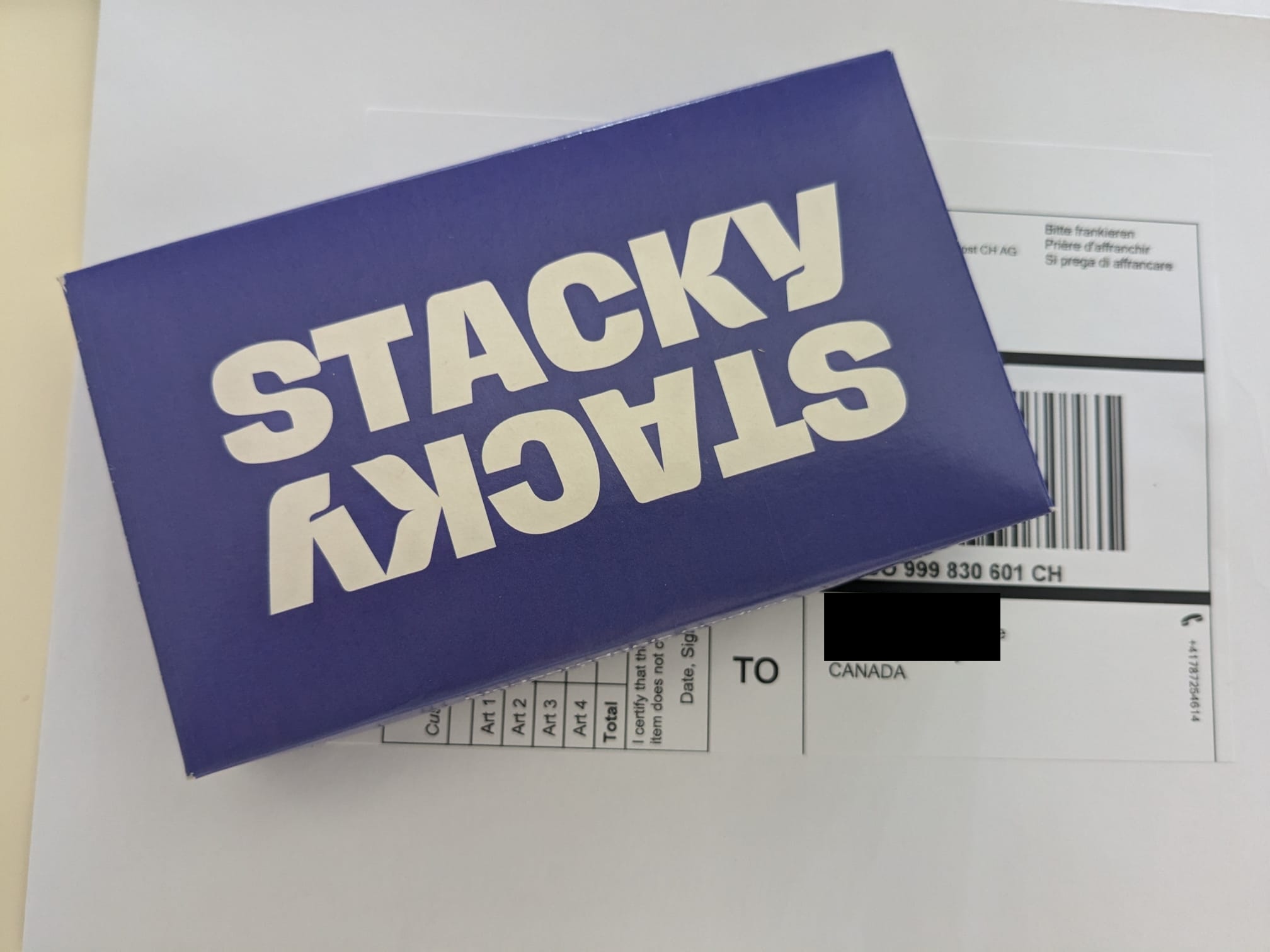
Is there anything else you would like our readers to know/be thinking about?
We’d like to encourage everyone to rethink their approach to hockey gear, especially for kids. With Stacky, we’re applying key concepts of the circular economy—rethinking the need for new purchases, reusing existing products, and repeating the process to extend the product lifecycle. It’s a simple yet powerful way to save money and reduce waste, all while keeping your kids on the ice with the right-sized stick.
You can learn more about the Stacky Kickstarter and support it [HERE].
 Hockey in Society / Hockey dans la société