This post is an excerpt from Dr. Sam McKegney’s open access article published in the current volume of the Journal of Emerging Sport Studies. Sam is a settler scholar of Indigenous literatures. He has authored two monographs concerned with Indigenous literary art and is the editor of a collection of interviews on the subject of Indigenous masculinities. Sam is a founding member and Past President of the Indigenous Literary Studies Association and the principal investigator for the Indigenous Hockey Research Network.
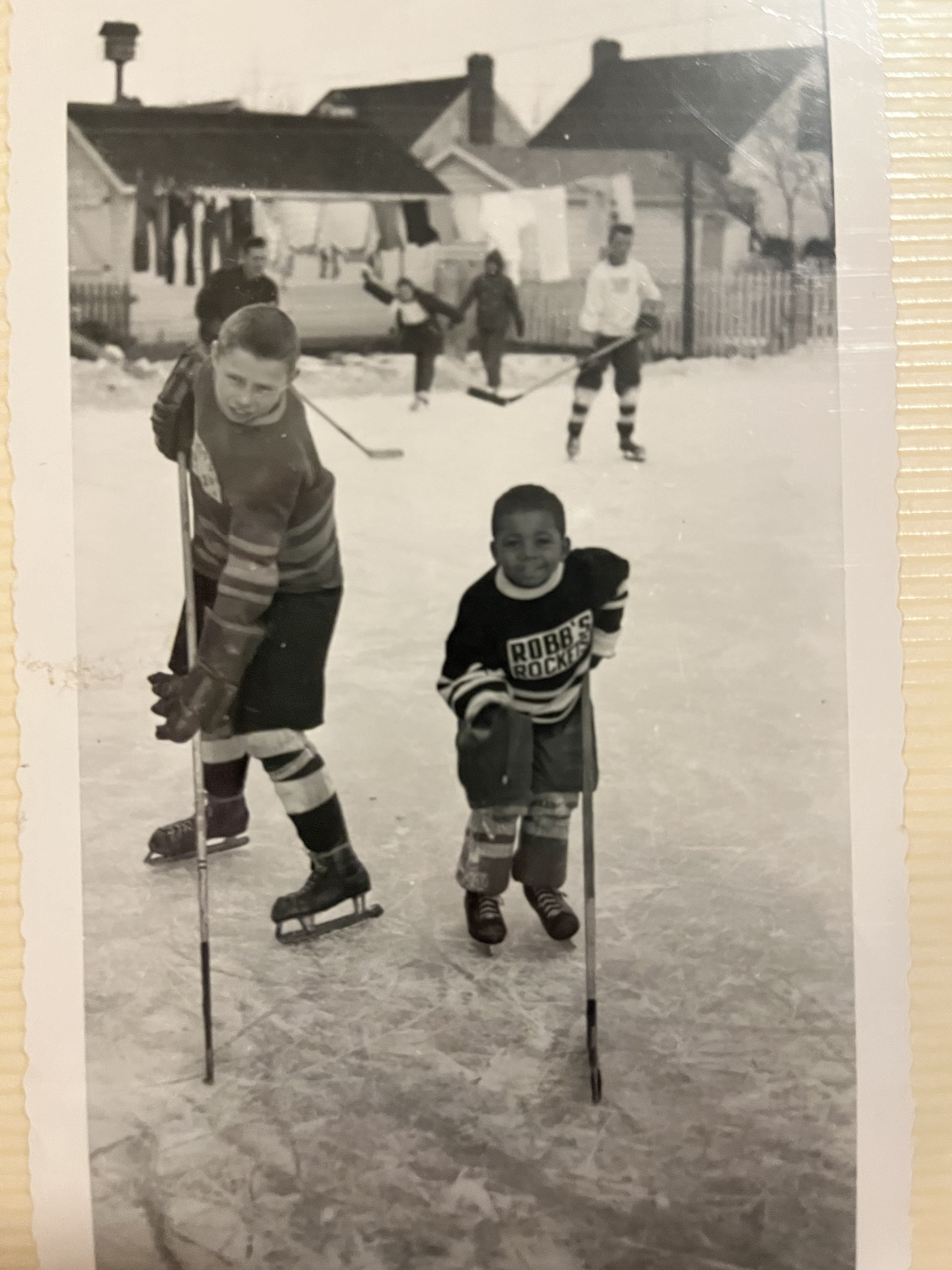
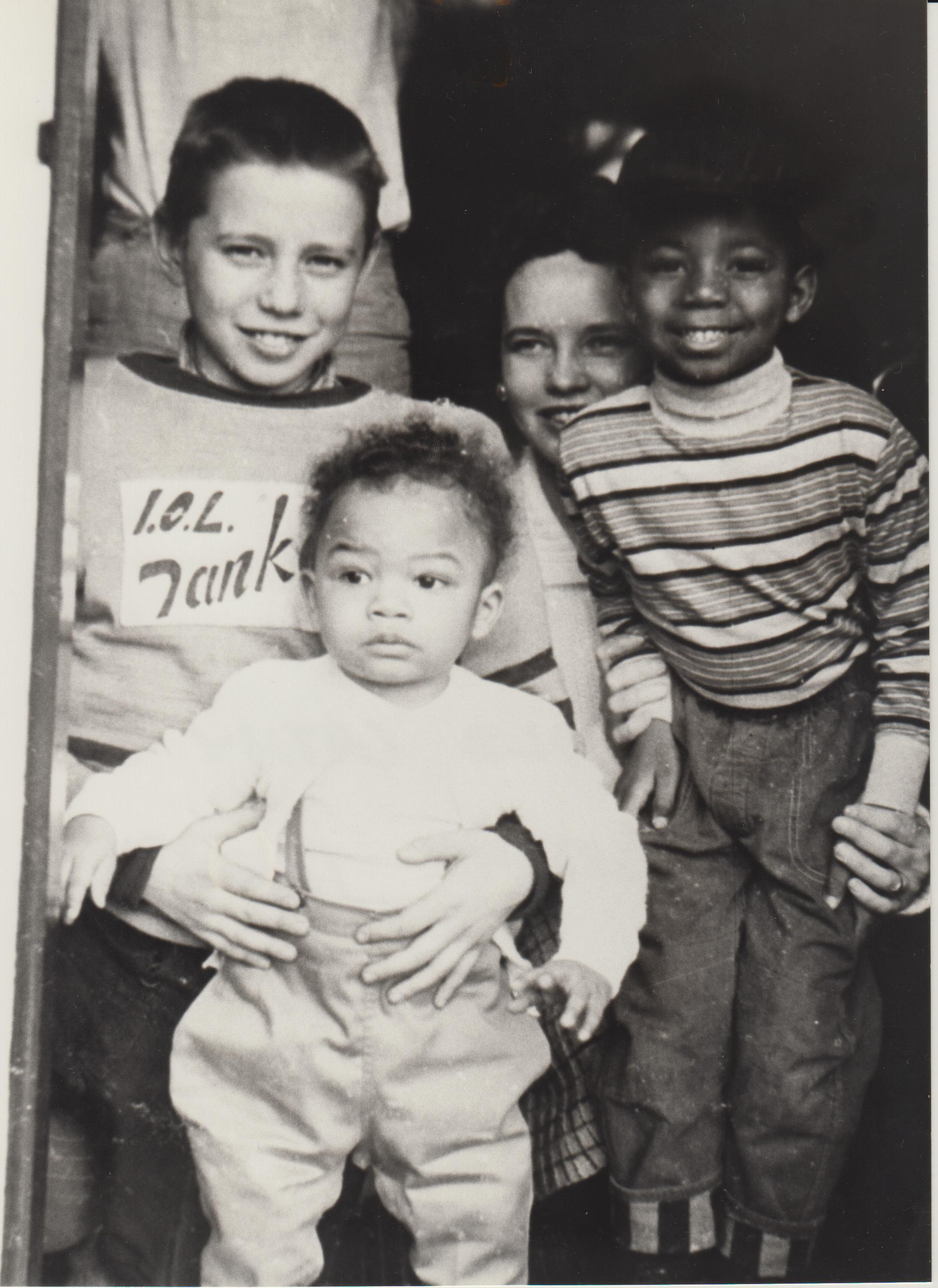
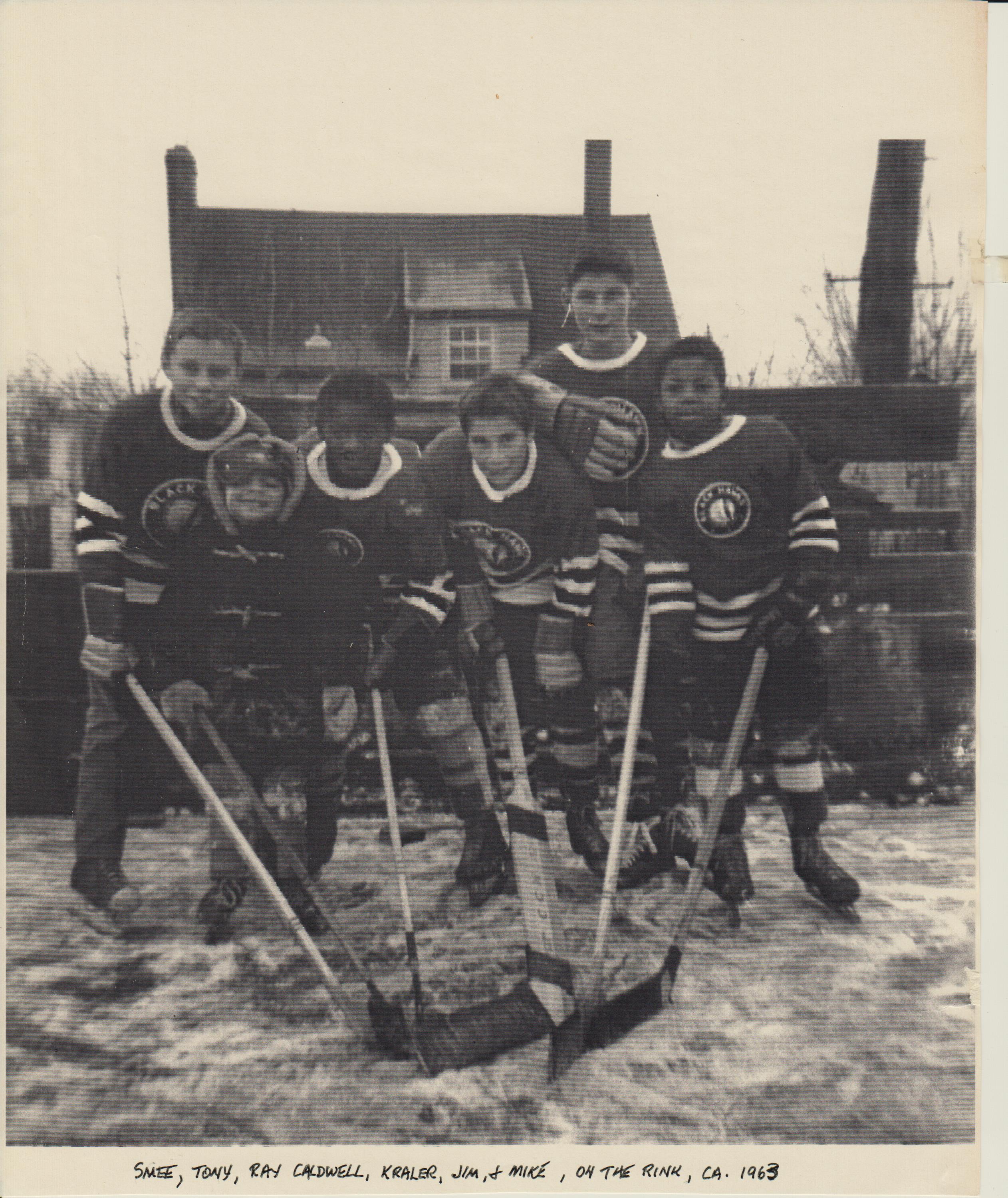
I’m among the lousiest in a line of pretty good hockey players. My dad played three games of defence for the Chicago Blackhawks in 1976, the year I was born. My Uncle Tony amassed 320 goals and 319 assists over a thirteen-year National Hockey League (NHL) career. My Uncle Mike, purported by some to be the most talented of the bunch, was a fourth-round draft pick of the Montreal Canadiens, though his career peaked with the Kitchener Rangers of the Ontario Hockey League (OHL). Even my older brother Sean played some minor pro in the United States after his varsity days drew to a close at the University of Windsor. By size, demeanour, and talent, I was spared genuine aspirations as an elite hockey player, yet the sport has been formative to my sense of self, as well as my sense of belonging within my family’s stories. I always knew my old man was a skilled player and that the game had taken him to places like Sweden, Austria, and Texas. We’d watch Hockey Night in Canada as a family most Saturday nights in the winter when I was little; between the first and second periods, Sean and I would play mini sticks (often getting into mock hockey fights I would invariably lose), and then, if the game was close and we’d been good, we’d get to watch the third period on the tiny black-and-white television in my parents’ bedroom as we fell asleep. When Uncle Tony was playing in either Detroit or Toronto—the two closest NHL cities—we’d often pack into the station wagon and drive the three hours each way, hoping Tony would score and we’d get a glimpse into an NHL dressing room, maybe even score some autographs. Our station wagon had that rear-facing third row of seats that folded down—yup, dating myself here—and mom and dad would arrange it into a bed for Sean and me for the drive home; seatbelts be damned! I remember marveling at the sea of headlights and tail lights as we drove out of the city, ‘how can there possibly be that many people?’ In elementary school, though bookish and into music and theatre, I would unironically have called myself a “hockey boy,” often with the mullet to prove it. Heck, my folks say my first word was “hockey”—pronounced “huh-geeee” after a deep inhale. Close to fifty years later, there are few things I prefer doing than lacing’em up for a game with my oldtimers team. Within family lore, my grandparents’ backyard rink on Shepherd Street in Sarnia, Ontario was a hotbed of hockey talent and community spirit. You see, Tony and Mike, who were adopted, are Black and my dad is White: three professional hockey players in the same family, none of whom is biologically related to the others. In family stories, it was the endless hours of unscripted, uncoached play on the backyard rink, rather than genetics or elite coaching, that fostered future hockey success. Uncle Mike put it this way: “That’s what you did in Sarnia: you played hockey in the winter and baseball in the summer. It was always a hockey stick at Christmas time. I spent more time outside than I did in my house, basically. We were always skating in the backyard” (quoted in Zadarnowski, 2019). As old photographs attest, my grandparents’ rink was indeed a winter epicentre of their neighbourhood, drawing both boys and girls and kids of different backgrounds, ages, and economic means onto the icefor camaraderie, exercise, and rugged play. In the stories I’ve inherited, my family was a rare beacon of racial diversity and inclusion in the 1950s, with hockey as its engine of belonging.
Of course, some of that was fantasy. It didn’t include the virulent racism my uncles (and my grandparents) endured, both in their hometown and throughout the young men’s playing days, or the toll a hockey-playing career would ultimately take on my uncle’s body. It didn’t include the forms of subtle exclusion that would undergird gendered relations in the family. And it certainly didn’t include any understanding of settler colonialism in lands claimed by Canada or our family’s place therein. You see, my grandfather—a widely read, quirky, and hilarious champion of racial equality—was a chemist for Imperial Oil and his father—an anti-poverty and veterans’ rights activist after the First World War—was an Anglican minister. These two men, remarkably progressive in many ways, were also engaged in vocations implicated in the ongoing dispossession of Indigenous lands (resource extraction) and Indigenous cultures (evangelization). I mean, “Imperial” is in the very name of the company from which my grandfather drew his pay cheque. And yet in my family stories, we were not the colonizers—we were the ones who welcomed Mike and Tony home.
For White settler Canadians like me, hockey can function this way—as a staking of claim to belonging on what are Indigenous lands. In the opening montage of Volume One of Hockey: A People’s History, Wayne Gretzky is depicted saying, “Are we going to have challenges? Absolutely. But nobody’s going to take away the fact that it’s our game. That’ll never be taken away.” The supposedly self-evident claiming of hockey as a national possession is simultaneously a claim to territory and identity: “if the game belongs here, it belongs to us, therefore we belong here, therefore here belongs to us” (“Manufacturing Compliance” 34). It also serves to erase Indigenous prior occupation and territorial entitlement. This is why some Canadians seem to love Indigenous-themed team names and mascots—the Chiefs, the Warriors, the Eskimos, the Blackhawks: they allow White athletes to perform indigeneity in the absence of living, breathing, politicized Indigenous people.
Having conducted research on Indigenous hockey for the past several years, I believe these dynamics inform the specific valences of both systemic and interpersonal racism in Canadian hockey today, as they have for over a century. Among the most common racist taunts endured by Black and other racialized hockey players is “go home,” a performative utterance insisting on their unbelonging because, unlike their White teammates and opponents, they are imagined not to be from here (read A Fly in a Pail of Milk: The Herb Carnegie Story by Herb and Bernice Carnegie and Shut Out: The Game that did not Love Me Black by Bernie Saunders and Barry Meisel). Among the most common racist taunts endured by Indigenous players is “go back to the Rez,” which implies Indigenous people don’t belong in this place—the arena—or in this time—contemporary Canada—because Indigenous cultures are imagined to be an anachronism, something that should have disappeared in the face of inevitable Euro-Canadian ‘progress’ (read Life in Two Worlds: A Coach’s Journey from the Reserve to the NHL and Back by Ted Nolan and Meg Masters and Call Me Indian: From the Trauma of Residential School to becoming the NHL’s First Treaty Indigenous Player by Fred Sasakamoose). When our research team, under the direction of Dr. Robert Henry, worked on an ethnographic study with the Cree-owned and operated U18 AAA team Beardy’s Blackhawks in 2018-19, every single player interviewed—Indigenous and non-Indigenous—expressed having experienced or witnessed anti-Indigenous racism during that season. As a younger person, I never questioned my White relatives’ rights to belong either in hockey culture or on the lands upon which we played, and yet I simultaneously took pride in how my uncles had fought to claim space in the game, viewing their flourishing not only as remarkable but as evidence of our family’s progressive politics, perhaps even benevolence. Literary scholar M. H. Abrams describes a mythology as “a system of hereditary stories” that serves to explain “why the world is as it is and things happen as they do” (170). Mythologies are tools that help us navigate our world. Growing up in the 1980s and early ’90s, I reached to mythologies of Canadian multiculturalism—telling me that, unlike the American ‘melting pot’ to the south, ours is a welcoming culture celebrating ethnic and racial difference—and to mythologies of hockey—telling me that the game, played in its purest form by children on an outdoor rink, fosters selflessness, toughness, and moral fortitude—to understand my family’s history and my place in the world. Family mythologies often complicate and even contradict broader societal ones, but in my case I would say they were mutually constitutive—never fully coherent but impossible to separate, like old skate blades fully rusted into their plastic housing. While mythologies offer lenses through which to see the world, they can also distort and refract, even reflect back to us only what we want to see.
This essay considers how the past seven years working with Indigenous athletes, organizers, advocates, and researchers as a White-settler member of the Indigenous Hockey Research Network has helped me rethink my relationship to the game, to the Canadian nation state, and to my nation’s decolonial responsibilities. In it, I try to melt the ice beneath my feet to reckon with the land below it, land which is not my own but about which I care deeply. What follows is a series of autobiographical reflections on hockey culture, Canadian nationalism, and settler colonialism that reaches for guidance to the voices of Indigenous athletes and advocates with whom I’ve had the privilege to work.
Continue reading the full article [HERE].
You can also listen to the audio article [HERE].

