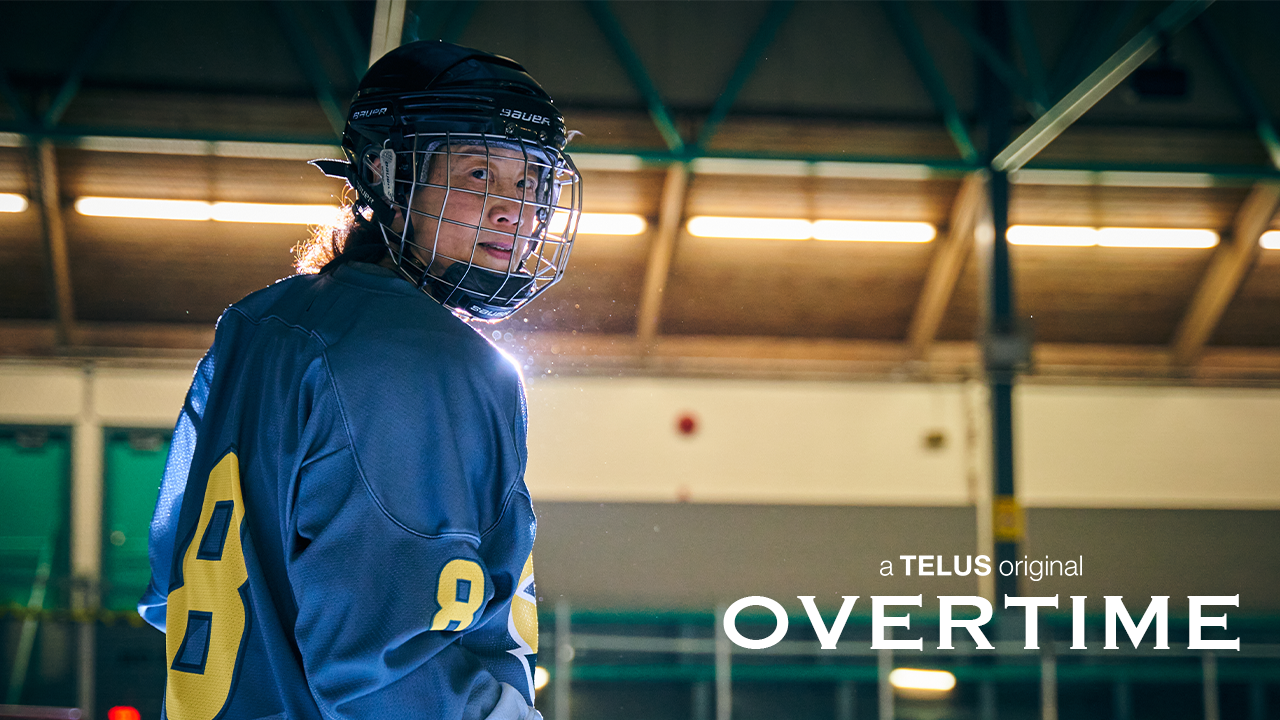
Overtime is a 40-minute documentary about Kelley Lee-Gilmore, a 60-year-old mother, wife, and university professor, who also loves hockey. It has been at the Calgary International Film Festival and the Vancouver Asian Film Festival. I recently had the opportunity to sit down (virtually) with Kelley and her daughter, who also directed Overtime, Jenny Lee-Gilmore to chat about the film, their relationship, and Asian representation in film. Watch the trailer to Overtime first, and then check out our discussion via Youtube and/or follow along with the full transcript.
Update: Overtime swept the short documentary category at the Vancouver Asian Film Festival 2023 winning “Best Canadian Short Documentary,” “Best Cinematography for a Canadian Short Film,” and “Best Director for a Canadian Short Film.”
Courtney Szto: So we have here with me an awesome opportunity to chat with Jenny Gilmore and Dr. Kelley Lee Gilmore about their new film Overtime. So I met Kelley a few years ago when I was doing my Phd project and somebody connected me with Kelley as somebody who’s very in tune with the Vancouver hockey scene, you were able to connect me with some research participants, which was great. And then through you, I ended up meeting Jenny down the line. We haven’t, all 3 of us played hockey together yet, but I have had the opportunity to play with Kelley and your son Alex, which he’s annoyingly good. Very fast, and very young. Too young for us.
Kelley Lee-Gilmore: Oh, boy.
Courtney Szto: And Jenny, you had a film called Breakaway, a short film a a few years ago that was also inspired by your mom. So you’re getting a lot of leg work out of your mom for your film products. Do you wanna tell us a little bit about Breakaway and then kind of how we are sitting here today talking about another film.
Jenny Lee-Gilmore: Yes, so Breakaway was a short film I made in film school. It’s a short narrative about a young Chinese Canadian girl growing up in 1970’s Vancouver, and she really wants to play hockey. So that was the short film based on my mom’s life, a fictionalized version [Read our interview with Jenny about Breakaway HERE]. And that brings us today to Overtime, which is the 40 min documentary about my mom’s real life and journey to playing hockey, and it follows her team, who are the 55+ BC Women’s team competing in the nationals. So we had a film crew follow them around in this documentary.
Courtney Szto: First of all, congratulations for having this out in the world. I mean, it’s always a lot of work and and time that goes into making a production like this, and to see it kind of shared with everybody is always a big moment. But when I watched it again this afternoon I was thinking what a wonderful legacy piece just to have for your family, because your whole family is in it. Your husband’s in it, your sons in it, Kelley. So what’s that like to just kind of have this little…It’s like a time capsule, a little snapshot of your family that gets…it will live…kind of get to be passed down from here on out.
Kelley Lee-Gilmore: Oh, it’s amazing to, you know, who would have thought that this would all happen? But exactly, it’s it’s a great record of this really special week that we had last year, but also just capturing the…It was a very much a family involved event so capturing that was fantastic. And then all the polish of the professionalism of the camera crew and everything. It was like the best home movie ever. So I feel very lucky.
Courtney Szto: It’s true. It’s kind of like a vacation video for your family, but a very well produced one. So, Jenny, how did you come up with the idea for this film?
Jenny Lee-Gilmore: I think my mom was telling me about the tournament that she was going with this team, who are all 55+ women, and they were competing in the nationals. And I just thought to myself, Wow, that would make a great documentary like I’d love to film that. But at the time I didn’t have any funding, and I think this was before [the tournament] got cancelled were pushed because of Covid and then the tournament got pushed and it gave me time to be like, “Oh, my gosh, this could be a reality. I could really, actually film this and make it happen.” So yeah, I was really struck by the story and and wanting to follow the team, and of course my mom. We were lucky enough to, I think, get funding like just a few months before the actual tournament. So it it became a reality because of Telus Originals and then meeting the team as well. I also realize that this is such a special story.
Courtney Szto: Kelley, what is it like having a film crew follow you around, considering nobody usually watches our Beer League games. Nobody cares and then suddenly, you’re the center of attention.
Kelley Lee-Gilmore: Yeah, you know Jenny’s always has a radar out for a good story. And I thought this was a good story, so I just told her about it, and then, when she pitched it to Telus, you know, I was all excited. I thought it was gonna be about the team. And when she came back and said, Oh, actually, they want to focus because of, I guess you know, telling a good story, yet focus on one person, and that person happens to be me in our relationship. I was really nervous, I mean, I was quite uncomfortable, because, of course, it never happened to me before, and I think I was also concerned because hockey is so much about the team. It’s not about individuals. So I felt, you know the sum is greater than the parts — why are you focusing on one person? But it made sense, I guess, from a story point of view. And so having a crew follow me around, yeah, it’s certainly a new experience. The main thing that made me nervous was worrying that the crew didn’t think we were very good hockey players. It sounds kind of crazy, but you know, or that I wasn’t a very good hockey player, and you know I was nervous that the crew would be watching NHL games, and then they would watch us, and we would pale by comparison. But I think we really lucked out because the crew didn’t really know much about hockey except one person who played, so they didn’t have any expectations, and that was a relief. And they even said we they that we surprised them. They got really into it, and they became our number one cheerleaders at the games. So that was super fun but I would say the film crew is lovely, because, you know, when you’re the focus of filming you know, and and it’s every moment, not just when you’re all made up and have your hair done and stuff. It’s when you’re all sweaty and horrible playing hockey, and you’re looking your worse. That’s when I was feeling particularly nervous and you know the the trying to focus on the games because there was obviously important tournament going on and then having the crew. So I just trying to ignore the cameras, but they were in the changing rooms and then, of course, following around afterwards. So eventually I got sort of used to it. But what was really nice is Jenny’s a great director. She made me feel comfortable and she made me feel, you know, like it was just like, Oh, ignore the camera! Just talk to me, and it just saw her smiling face. And that made it a lot easier. So yeah, but I certainly definitely not giving up my day job. It was kind of a little bit of what it’s like to be famous, and it’s definitely nice to be anonymous. After that experience, I would not want that as a daily occurrence.
Courtney Szto: What did your team think about it when you told them we’re gonna have a film crew following us.
Kelley Lee-Gilmore: They were so exciting. First thing first, I said Jenny’s pitching this, you know, we’ll see. And and then I was nervous because I said, oh, she’s she’s gonna pitch for this documentary about the team. And then when she came back and said, actually Telus said it’s focused on you, and then make it about the team as well, but mainly about the sort of your journey. Oh, God, I can’t come back and say, Hey, actually, I’m the star of the show! So I let Jenny tell them. But they were, to their credit, they were so supportive, even though it wasn’t focused on the team. They’re hugely excited, and I think they what I said in the film, you know that we felt seen. There was a moment somebody asked some of our players, hey, what’s this film crew? Which guys team are they following? Right? So they just assume it was a men’s team that they were being filmed, and there was great pleasure and telling them, “No, it’s actually us they are filming.” So that was lovely, you know, that we actually mattered enough to have a film crew follow us around and they were so stoked. To be honest, they’re very, very excited.
Courtney Szto: Well, that’s quite the assumption, that there must be a men’s team! Jenny, in the film, very early on you talk about how part of your priority around the film was that you see your mom a particular way, and your mom sees herself in a different way. And that this was a way to reframe your mom’s relationship with the way you see her as young and active…as this badass hockey player. Talk to us a little bit about that.
Jenny Lee-Gilmore: Yeah, I mean, one of the reasons I wanted to make the film is to show my mom how badass she is. I think she’s selling herself short, even in this call. My friends and like the crew were very impressed with the level of hockey that was being played. I mean, you see in the film they’re speedy! I personally don’t know if I could have even kept kept up with them. So firstly, they’re great hockey players. And I think my mom’s journey to hockey has been really inspiring to me. I wanted to show other people that, and by showing other people hopefully, having my mom see it, and actually reflect on her life and see how much she’s accomplished, how much she’s done, and how much of an inspiration that is to me, and will be for other people who watch the film. And I think that’s what Telus saw as well when I was pitching the film. It’s great to have these women playing hockey at 55+, but I think what everyone can connect to, regardless of if they play hockey, is this is a woman that is doing something that she feels passionate about at a older age. She’s still playing, and she’s gone through a lot of barriers in the beginning of her life where she couldn’t play, and a lot of odds were stacked against her. So I think that as a universal theme was very relatable and inspiring to people.
Courtney Szto: Yeah, I think what I love about Overtime is that it shows how seriously some of us take our beer league hockey. Obviously not everyone writes themselves scripts the way Kelley, you did in one of your games. Do you do that all the time Or is that just because it was a big game?
Kelley Lee-Gilmore: Yeah, only for big tournaments that would take a lot of time. But I think that’d be, even for me, a little too serious. Yeah, beer league games, I actually am less serious about those games. And I used to be ridiculously intense about every game I played, but I now know the difference. So I’ll prepare for those tournaments because, I don’t know how you are Court on the ice, but I get really, you know, a bit too overthinking things, and I also need to play with confidence. You know, it’s a cliche, but if you’re going in and you’re doubting yourself or something, you make a mistake, and you dwell on that. It’s, you know, bad for your game. So you need to mentally, really prepare. Those scripts are incredibly important. I was told about them by my teammate Gwen, who is a high level coach. She coaches the National Ball Hockey team for the US and for Canada. She was an incredibly high level coach, and she has these young women who she tries to teach them about the mental side of the game. I just picked up this little tidbit. We shared a room once in a tournament, and I’m such a sponge. I’ll just learn from her. Yeah, I have this little script that I refer to and it kind of calms me down. You play in the moment. That is the key thing you just play in the moment, put everything out of your head. It’s gotta be instinct. It can’t be, you can’t be, you know, kind of thinking about things too much on the ice. That’s when you play your best and I love that.
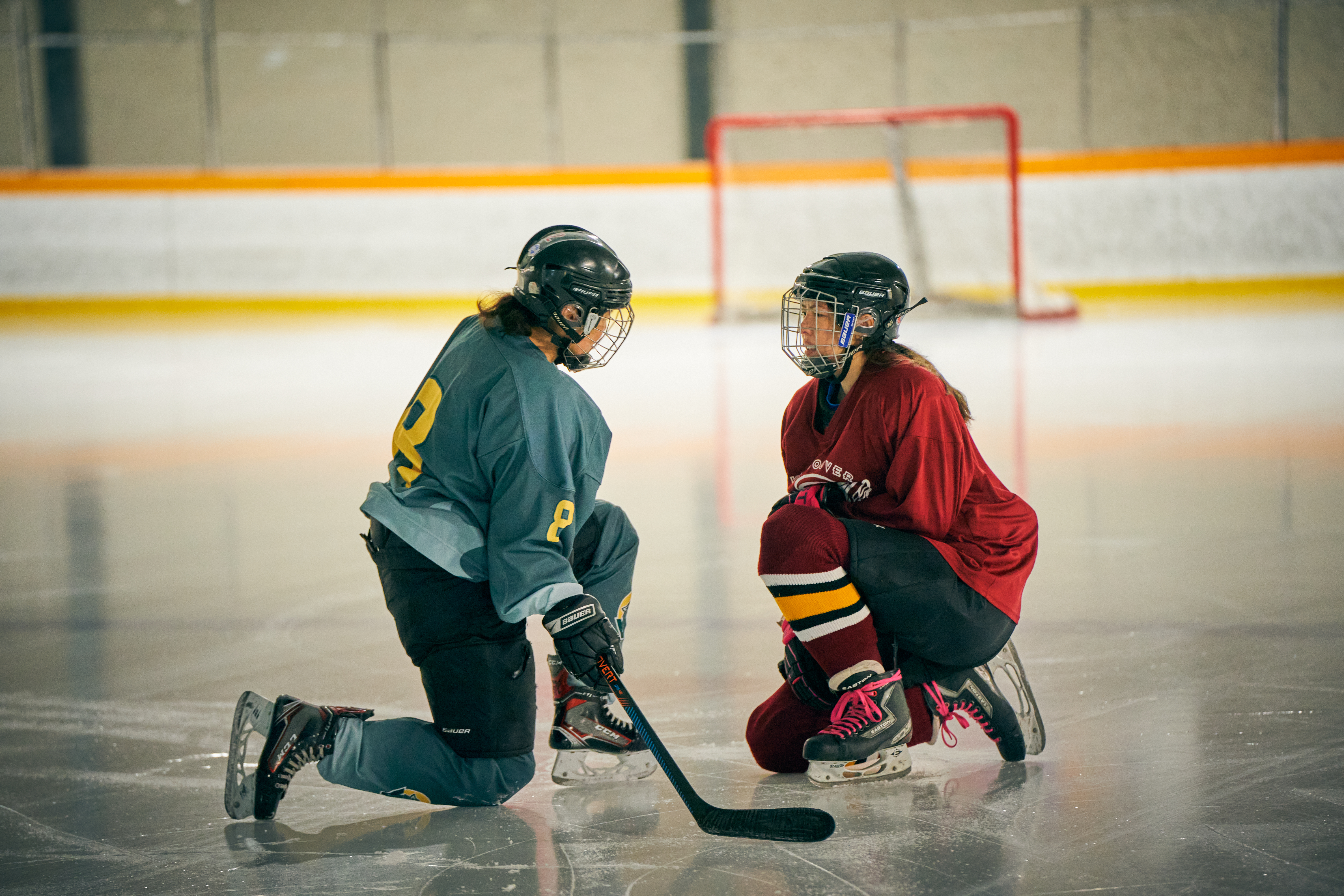
Courtney Szto: We see you kind of like doing a bit of weight training, and also, like the the pre game, warm ups and stuff There is a method to the madness. Right? We’re not just rolling up to the rink and hoping for the best. Your team takes it quite seriously, and, as you say sometimes in beer league we can take it seriously, too, sometimes too seriously but that it matters, that hockey really matters, especially to folks who came to it at a later age. It is a big deal for us, and we take it quite seriously, and we try to approach it with some level of professionalism if we can, making sure that we’re healthy enough to compete on the ice to the best of our ability. And Kelley, you and I were at the 2018 Ouellette-Poulin Adult camp. We’ve had that experience of getting to see a little bit of what it would be like to be a professional athlete, where your whole day is kind of revolving around your sport, which is awesome. And I think, Jenny, the part of the film where you have the individual player intros where everybody is skating onto the ice is so cool. That’s living the dream for a lot of us.
Jenny Lee-Gilmore: Yeah, I wanted to create that, not only to include the whole team, but also that’s all the stuff like all these images of players coming onto the ice, they’re usually seen at NHL games. A lot of men, you know, usually see women of a certain age and those kind of shots. So we’re trying to recreate that intensity and badassery. Is that a word?
Courtney Szto: Yes, totally! I loved it. Who do you hope is the intended audience for this this film. Who do you hope gets to enjoy it?
Jenny Lee-Gilmore: It’s changed a little. Initially, I wanted it to be female hockey players of a certain age group. But now that we played the film more, it’s turning out, there’s a lot more audiences than I thought would relate and enjoy the film. I think a lot of younger female hockey players will enjoy it young people in general and anyone who’s, I think, had a passion or a love of something that hasn’t felt attainable. So really, anyone that’s yet kind of had a underdog story, but especially the female hockey community of a certain age group.
Kelley Lee-Gilmore: Could I jump in here? I think I think there’s two main audiences. You’re right, Jenny, there’s people who I thought wouldn’t find this that interesting. We’re just getting all these emails and lovely messages, saying how they enjoyed the film, even though they don’t particularly like hockey. But I do think the hockey community is the, you know, I initially thought that would be where our main audience would be because the hockey community would understand the obsession with the sport. I hope that they do enjoy the film because you can connect with the pure joy I think of playing the game and whatever age you are. I think you could see that in the women, so I hope hockey players will go away and think, “Oh, yeah, I can enjoy the game at any age.” You know, if I, whenever I stop, but hopefully not for a long time, I think that’s really inspiring. I think the second audience has probably become the more important one, and I think it’s women, especially older women who maybe (You go through this process Court, you’re not quite at that stage yet), you go process of aging where you realize that people see you very differently. That’s, you know, society. Really, how society sees older women. I said at the screening last Tuesday that the documentary, yes, is about me and my crazy obsession with hockey, but then I found my people. So it’s kind of a nice story in that sense. On another level, the film is about how women, when they we get older, it’s difficult for us — physically — very difficult. You go through all these physical changes. But it’s more even challenging in that society starts to see you, or, more importantly, how it doesn’t see you. You just become this invisible demographic and you kind of disappear from so many aspects of society, including competitive sports. People don’t think of older women when they think of competitive sports. You kind of fade into the background. So the film really, hopefully, we’ll speak to older women. And, after the showing last week, my auntie Rosalie came up to me, she’s 80, and she’s usually a very quiet person, but she was so full of enthusiasm from what she saw in the film. She never played hockey in her life and probably isn’t particularly a hockey fan, but she spoke to me and said, “You know, I really related to that” because she’s 80, and she’s still trying to be active. But it’s always a challenge trying to be…I guess there are not opportunities to shine as older women. And so I think the film is a lot about that as well. So I’m hoping the audience will also be older women, and how we all go through that same process of becoming invisible. And we’re gonna fight it!
Jenny Lee-Gilmore: That’s so interesting because obviously, I’m young, and my mom’s demographic, you’re saying older women. It’s true, so many older women, I think, will find this film relatable. But a lot of people my age as well, really enjoyed the film. Firstly, to have something to look forward to and realize that there’s things in their life they don’t have to give up once they get to a certain age, and a lot of people, like a lot of my friends who have seen it, have seen their parents in a different light because of the film. It kind of humanizes your parents, still having all these passions and desires and wants. So yeah, the audiences have become a lot wider than I initially thought and I think that’s been a really beautiful experience is having different people come up and tell us what parts of the film they found relatable.
Courtney Szto: I love that. When you were talking earlier about folks who didn’t necessarily love hockey, but have taken to the film, I think that an important part of it, because most people who’ve decided that they don’t like hockey, it’s because they’ve had bad experiences with the dominant version of hockey in Canada. Right? So this is a really important counternarrative to be like, “No, not all hockey is like that.” There are so many different stories out there. We just haven’t had the opportunity to to showcase them. Kelley has the the team seen the film yet?
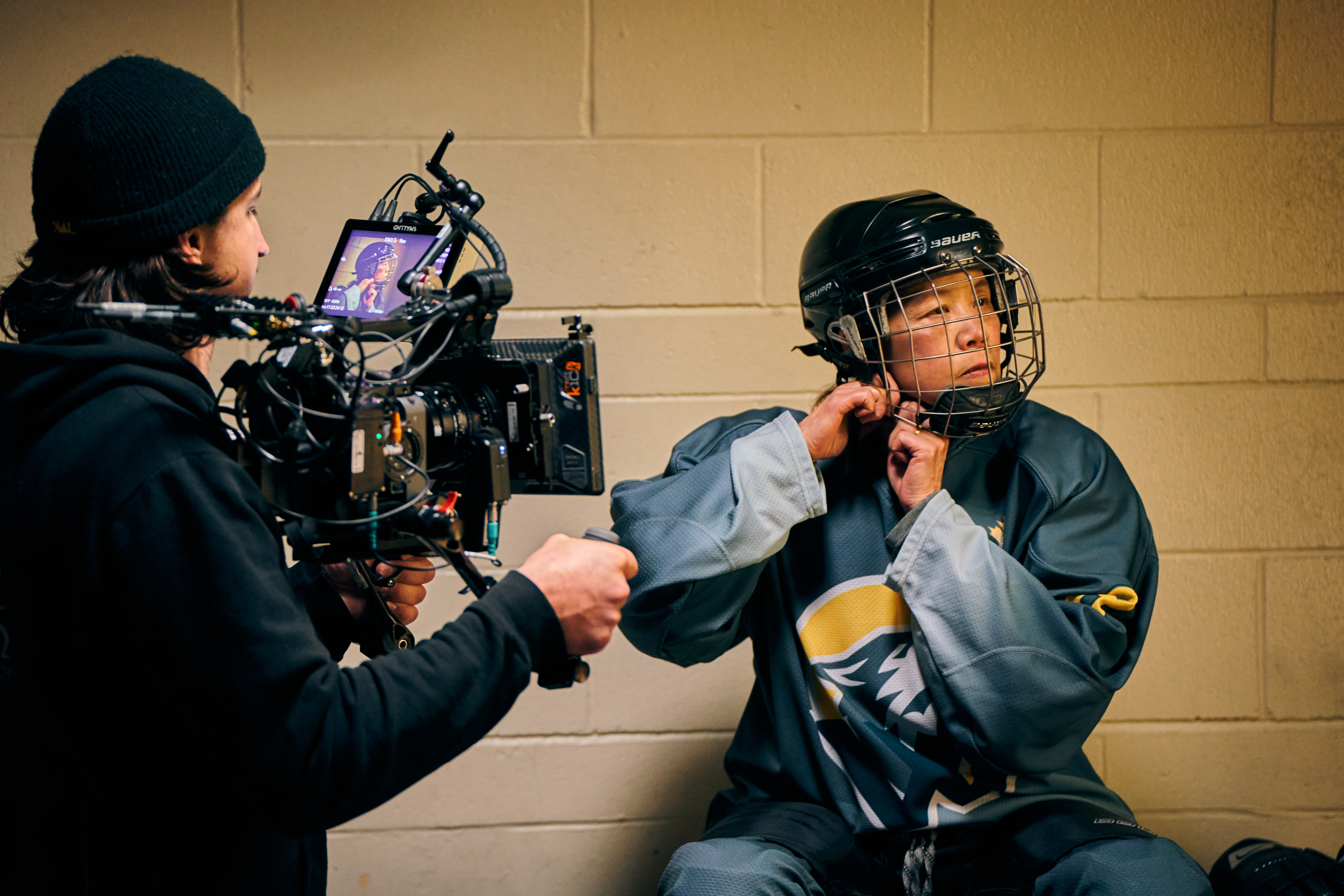
Kelley Lee-Gilmore: Yeah, well, most of them have now. We had that private screening last week and they very patient. I know that poor Jenny was being inundated with, “When are we gonna see this film? We’re getting older!” And finally they got to see it. There were a lot of tears shed a lot of, you know laughter. I have to say the film is… it takes you on a really emotional journey, really, a lot of laughter, a lot of tears. And and they loved it. I think, just being on screen, you know, they just were thrilled with that. So yes, they’ve seen it. They wanna show their families. They see it as also a really important momento of the period. We will be in our nineties, and we’ll go, “Hey! Remember when we, you know, in our younger years, when we were 55…” It’s great. I love that, that’s a gift that Jenny has given them. It’s amazing.
Courtney Szto: Absolutely. Jenny, was there anything that you learned about your mom that was kind of surprising through this process, or something you didn’t know about her previously?
Jenny Lee-Gilmore: That’s a great question. First thing I learned is that she’s a natural on camera. Although you were saying, mom, you found it a little overwhelming at first, you were such a natural. I think it’s harder than you realize to be able to sit on camera and be as vulnerable as you were and talk about your life. I think I was really pleasantly surprised at how easy that was to follow you around. I also learned a lot about my mom’s story to playing hockey. I knew snippets, but making this doc…before making it and interviewing her on camera, I asked a lot of questions that I never asked before in terms of what drew her to hockey. What was it like when you started playing? What do you like about hockey, and what what has it done to enrich your life? So that was really interesting for me. I think also, I didn’t realize how many friendships you had through hockey, and how close you were to the women on your team. So that was really lovely to see you with all your friends
Kelley Lee-Gilmore: I am a workaholic, so I’m always in front of my computer. I seem like this lonely person in front of a computer all day, so it’s nice for her to see that I actually have a life outside of work. That was important.
Courtney Szto: Kelley, how about you? Is there anything that you learned about your daughter?
Kelley Lee-Gilmore: Yeah, for sure, definitely. I learned a lot about…I see my daughter as my daughter, right? And I love hearing about her work. But I learned a lot about Jenny. Your professionalism as a filmmaker. It’s a world I don’t inhabit so it was fascinating to me just seeing the process. I always trusted that I would be in good hands with you because I knew you’d be kind to me. You would never make me look bad on film. So that was, I knew that and I think what I learned, though working with her was what a great director she is, even if I wasn’t her mom. The director’s job, I learned, is about getting the best out of the person who is in front of the camera. It’s not an easy job because you have to, as a director, have the overall vision and you have to know what you want from the person and the subject. You have to be able to lead the crew that’s moving around behind the scenes to achieve that vision. So you know all of that swirling in your head, Jenny. I learned how difficult that must be when you’re trying to move this project forward and how definitive your role is in the film that ends up on screen. I know that you take a lot on the chin as a director, you still have to maintain a kind of positive tone. Even when people are tired or stressed, or you know, I don’t wanna do this. You still have to keep people motivated. I’ve learned, I’ve watched you and you always kept your cool, always patient and I knew that wasn’t easy, because you had your mom, but also all these other people to work with, it must have been very stressful, but you never let it show. That, to me, was really an eye opener of how professional you were. I’m so excited just to see what you’re going to direct in future. It’s such a challenging role as a director. But you know, just watching you in action, I’m really excited about what you’re gonna do in future.
Jenny Lee-Gilmore: Thanks, mom.
Courtney Szto: I think if you do the same film, the same people without the mother daughter relationship, it’s very different. That grounds it in a very, as Kelley said, an emotional way, but a very… I don’t know. It’s an extremely touching love letter to the family, which I think makes it very distinct. And it’s beautiful. I think, as you’ve alluded to, the significance of Overtime is not that it’s just about mature women who play hockey, but also having an Asian woman as the protagonist in a hockey film offers us a very unique lens through which to explore the game. Jenny, talk to us a little bit about your assessment of Asian representation in film and TV at this point.
Jenny Lee-Gilmore: Yeah, I feel really lucky that I’m entering the business at a time where this is even the conversation. I feel like 10-20 years ago this was a conversation that was not happening, or it wasn’t happening in mainstream spaces. There’s been a lot of improvement with representation of Asian people in media, but there is still so long to go. I think a lot of people still confuse authentic representation with tokenism, and there needs to be more progress both in front of and behind the camera. I think a lot of the time the people who are behind the camera, the decision makers, the people who have the power, the people who have the money, are not often the people who are from the Asian community, Asian-Canadian, Asian-American community. I really love the statement of there should be no stories about us without us; I think that’s still something that really needs to be worked on.
Courtney Szto: Kelley, do you have any thoughts of playing this leading role in a very kind of groundbreaking way?
Kelley Lee-Gilmore: Yeah, I mean, when I was growing up…it’s exactly…the representation was, I think we had Kung Fu played by David Carradine, who played an Asian guy. I think we had, you know, some really horrible stereotypes. So growing up, you didn’t feel very good about yourself as you were depicted on screen, if at all. So either you’re the villain, or you’re some comical character that you know people poked fun of, you know that that was kind of hard. And then… I lived in the UK for a long time, and it was always Chinese people, if they ended up on screen, you’d either be part of a triad or some sort of domestic abuse situation. You know you’re never anything…you’re just depicted in a certain way. So I was really excited when Telus was interested in me as a hockey player. I know they’re very interested in hockey, and I know they’ve done other series of junior hockey players, for example. I was going to be really different from them, for sure. I think what really excited me was that I could change that narrative. That hockey isn’t just that demographic. We have a lot of different hockey players in Canada, and we just never get our story told. It’s not just me, but there’s just a as you know, Court — you know, you have been highlighting this for a long time — there’s such diversity out there, but no one would ever know. You ask anyone in this, in this country or any other country: draw a hockey player, right? And they’re gonna draw a white male. So it’s really important, I think, especially now, I think hockey is going through a really difficult time in Canada. We’re, you know, it has to change, and there’s already so much richness out there, and we’re just not tapping into it. I think there’s also a business side to this, you know, if you wanna grow the game, and it’s not that typical demographic that’s growing. It’s actually female hockey. And it’s new Canadians wanting to play hockey, and there’s all sorts of people who don’t get a chance to play and they can be put off. So I hope that the film will show, hey, if I could do it, you know, at my age and my cultural background and my gender, I think it’s a sport for everyone. I guess that’s kind of cliched but I hope that’s what people come away with — they see Asian women differently. We can do more than what has been depicted on screen in the past, and that hockey itself is much more than what we see on screens. It’s just such a narrowly told story.
Courtney Szto: I think, if you even reflect on the fact that the three of us are here right now because of hockey is quite interesting. Three generations growing up in Canada, in the UK, and coming to hockey at very different stages. Jenny being able to play through her youth and that’s how long the change takes for us to kind of start to see a leading edge of something different. But hopefully, now we can start to see more exponential growth because we’ve created a different landscape. Hopefully, there’s obviously a lot needs to change, but I think this is a very good sign that things hopefully will be different in the future. Kelley, in the film you are seen in the locker room holding a stuffed monkey at some point. But you never really talk about why you’re holding a stuffed monkey. What is the significance of the monkey?
Kelley Lee-Gilmore: There they are! It’s not a stuffed monkey; it’s actually my skate guards. Yeah, so these are great and Jenny has lions. There’s different animals you can have. So basically, the skate guards were my sons, Alex, and he had them for a long time, and then he got to the age where they became a little bit embarrassing, so he gave them to me. I said, I want them. I think they’re cool. So one day, you know, they became my lucky monkeys. There’s wonderful stories about the monkey king in classical Chinese literature. You know the Monkey King had supernatural strength and speed. But I like Curious George as well. So I thought, monkeys, this has gotta be a good thing. It was meant to be. So I took them, and then a few tournaments ago, I think it was the U.S. Nationals where I started this tradition. I don’t know how I started doing it, but I started to rub between the eyes just to bring myself luck. I just, you know hockey players are so superstitious, right? You start something, and then you start winning, and then you have to do it again. So I was doing that, and I was tickling him, I don’t know why, under the chin. And then I scored some goals, and then we won the tournament. So now I thought, Okay, I can’t stop doing this at tournaments. I have to do that every time. In Kamloops I started to do this. I thought I was doing it quite quietly, but my teammate Karen Minato, noticed that I was had these monkeys, and I was doing this funny rubbing the eyes and stuff. “What are you doing?” I said, this is my lucky monkey! I have to do this, so she started doing it as well. The two of us, before every game that you see on the film we had these monkeys. Then the one game where we forgot cause we I don’t know, we were distracted — we lost. Oh, we kicked ourselves like, we cannot not do this. So yeah, so this is the tradition now. At my last tournament, it’s over the summer we, the monkeys, came out again and we won! I can’t grow beard, but I can rub my monkeys between the eyes.
Courtney Szto: I’m so glad I asked about the monkey.
Kelley Lee-Gilmore: Do you have any superstition things, Court, before important games? Maybe you need to find one.
Courtney Szto: That’s too funny. I mean, I have a bit of a routine. It’s kind of my superstition before playoff games, but I don’t have a lucky monkey or a lucky charm, I might have to look into it. Towards the end of the film, Kelley, you say that you never really thought about yourself as a hockey player. You always described yourself as someone who played hockey or liked hockey, and that through this process maybe you’re willing to refer to yourself as a hockey player. Is that how you refer to yourself now? Is that a solid change?
Kelley Lee-Gilmore: I’m still working on it. Depending on who I’m talking to, I guess. It’s like, yes, it’s taken me this long to get that confidence to see myself in that role and give myself permission. But yeah, I think you know, having come, you know, I won’t give it away but we did well in the Canadian nationals. We did win the U.S. Nationals at one point, and we’re going back in the spring. I thought, wow, if I’m doing all this stuff, I guess I am a hockey player! You know, seeing myself in that way is really important. I grew up where it’s actually not just non-Asian people, it’s Asian people seeing you in a certain way and going, “you play hockey?” And they look at you like it…it wasn’t a nice look. It was like you were some sort of oddball. And why would you do that? You’re supposed to, as an Asian girl/an Asian woman, you’re supposed to be quiet, kind of, passive. Maybe. Don’t put yourself forward competitively, and you’re supposed to ideally be small, and you’ll relate to this Court, cause you’re tall. But I was tall as a child, and I was always seen as this giant person, right? Because my cousins were tiny and so nothing…I never conformed to any of the ideals. Then telling them I play hockey, they just thought yeah, you would, wouldn’t you giant person, you? Yeah, it was kind of giving myself permission — this is me. This is who I am. This is what I do, and yes, it’s taken me this long. But yes, I am a hockey player, so like it or lump it.
Courtney Szto: I concur. I definitely think you’re a hockey player. I thought you were hockey player the minute I found out you were on the ice like five-six times a week. I’m like, oh, she’s a hockey player. No joke about it. So what do you want the world to take away from this film? 1.) about women’s hockey, 2.) about adult recreational players, and 3.) about Asian women. Jenny, we’ll start with you.
Jenny Lee-Gilmore: Oh, gosh. I think my mom touched on a lot of it. I think, in terms of hockey. That it’s way more diverse than what is usually depicted in media. I think a lot of the time, it is just associated with white masculinity, when in reality it’s it’s like many different people play the sport, enjoy the sport, watch the sport. That there’s still competitive hockey for women of a certain age group. So in terms of hockey, I think that’s what I want people to take away, and also that it’s not just about hockey. I think you’ve seen the film. It’s also about friendships and that community around the sport and the different ways that it enriches these women’s lives, both mentally and physically. Then in terms of Asian women, I think my mom touched on it. But often Asian women, or at least in media, they’re often the best friend. They’re often very quiet, and I think just showing a new way. That Asian women can be competitive and physical is really important.
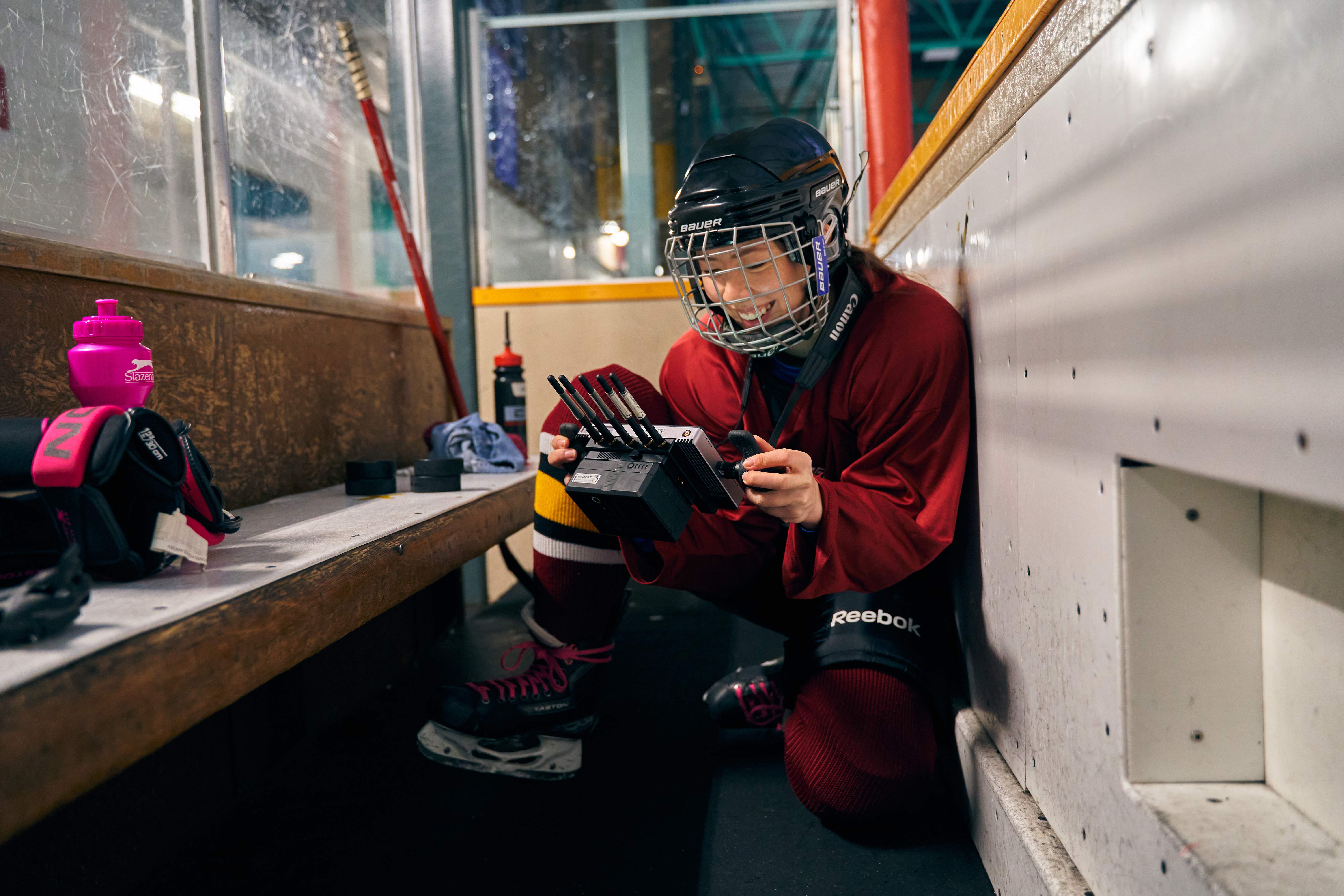
Courtney Szto: We’re also not super used to seeing Asian women behind the camera, either. So I think that’s also an important aspect of this. Kelley, what do you hope are kind of are the big takeaways for folks?
Kelley Lee-Gilmore: It’s such an exciting time. I know it’s historic time for women’s hockey at the elite level, and I know you’ve been involved in this Court. You know the creation of the new PWHL. The first draft, right? Wow! Training camp coming up. I mean, it’s so long overdue for these athletes. They’re so amazing. The standard of women’s hockey’s never been higher. I love watching them, but the problem has never been quality of play. It’s always been about limited opportunities for women to play professional sports. So I’m very excited for this period. I think the female side of the game, as I say, is the fastest growing one. They always assume “no, there’s gonna be no audience for them,” “nobody wants to watch female hockey players,” and there is, and it’s a growing audience. So if only I was 40 years younger! Or a hundred times better at hockey, too, because, you know, I would love to be involved in, you know, competing, and that, so that would have been great. But look forward to watching them. It’s all well deserved. For recreational hockey, there’s lots of exciting things happening. We started a 40+ league in here in Burnaby. But I think in general it’s a time for change as well. You go to any recreational rink around the country and the men’s teams dominate. There are larger number of men playing, so you know understandably, there are more teams, but the women are fighting for a spot and for space, and I think if I was running a rink, and I wanted to make sure it has sustainable business. I would be catering for the female market, you know, especially the women who can afford to play, want to play, haven’t maybe haven’t had a chance to play. I think that’s a really untapped market. There could be lots more classes, more leagues, more just…create a product that women will want. You’ve got this base business opportunity. I don’t think that’s quite catered for yet; I think there’s a lot of opportunity there.
I’ve really hope that Asian women, Asian people, will stand up, be themselves. It’s not an easy time to be Asian right now to be honest. You know, we had the pandemic. We have now a lot of geopolitical tensions, and my friends and I, you know we talked about this. Is there any good news about being Chinese in the news? It was all about negative things, and I think that’s something I grew up with as a child. You were never kind of depicted in a positive way. I hope that changes because there are so many interesting aspects of the community. We hope that we’ll be recognized not just as perpetual foreigners, but, as you know, part of the bricks and mortar of this country, which I think that is still not recognized. You know that Jenny’s the fourth generation in our family, and I don’t know if people understand that. You know that just I guess playing hockey is like, how more Canadian can you be, I suppose? And so I’m hoping that this film will kind of open people’s eyes that we are part of the community, and we’re part of Canada. Hopefully, those stereotypes will be put behind us.
Courtney Szto: Yeah, beautifully said. Jenny, what is in the pipeline for you? What are next projects? Is there another film we can get out of your mom’s hockey career?
Jenny Lee-Gilmore: I think I’ve tapped the resources of my mom’s life. At this point I think I need to leave her alone for a bit, and I’m sure when Overtime is released, I’m sure she’s gonna be getting a lot of attention for that. But I do have a few projects in development, and then a couple of more actively in production. So I’m doing another documentary next month with CBC Shorts about my diagnosis of narcolepsy when I was 21. That’s gonna be an even more personal film to me. I thought Overtime was personal. But this one’s gonna be even more. So I’m really excited for that project. I’m also doing a short film that I just got greenlit for about a granddaughter who’s dealing with her grandmother’s dementia, and how she’s navigating her new relationship with her grandma. She becomes more ill. And, then also a my first feature that I’m currently writing; it’s a horror movie. So I’m really excited about that. So a lot in the works. And of course, still Breakway as a series. That’s something I’m still working on and actively developing. So a few more hockey stories, but also changing lanes a little and doing some other projects that aren’t to do with hockey as well.
Courtney Szto: Very cool congrats on all of those awesome projects. We’ll keep an eye out for that. Kelley. What’s next up on your hockey schedule. You got big tournaments, big championships coming up?
Kelley Lee-Gilmore: You know. It’s it’s like I said for years — Oh, this could be my last year, you know, I might be behind it, hanging the skates up soon. And so, you know, I was playing like that, and I don’t think that way anymore. We have in April, we’re going to Tampa for the U.S. Nationals. It will be my third time going. Very excited about that. I think we’re bringing a really strong team. We’re still sneaking in there. I don’t… I still don’t understand why a Canadian team can play in the U.S. Nationals but don’t tell anyone. It’s super fun. Sunshine and hockey. So it’s nice combo, and then coming round we won, over the summer, the provincials. And in our age Group 55 plus. And so we have qualified again for the nationals. So two years after the film we’re gonna be competing in Quebec City. It’s gonna be tough, you know. We’re all that much older. And I think we have to go into the 55+. So a lot of us over over 60 now. It does make a difference every year that you’re older. You know the old bones don’t quite move as fast as you like. All that training, all that kind of weight training is really important, as you as you age, Court, when you get to that point many years ahead strength training. That’s all ahead of me. So yeah, we’re serious, not because we’re obsessed. We’re serious because we don’t want to get hurt. We want to compete at the best level that we can. I’m very excited. Got a squeeze it all in. I’m not retired yet. A lot of the players are, but I still have full time work. But I’m really excited about that, and it’ll just go on and on and see how far I go. I have a 71 year old teammate, so I’m the young one by comparison, and she is amazing. She hops the boards and she’s faster than me; I try and keep up with her.
Courtney Szto: Oh, that’s impressive. You’re definitely a hockey player like, “I’m going to this nationals and go to that national.” Thank you so much for taking the time to chat with us today. Where can people watch Overtime? How can they support you?
Jenny Lee-Gilmore: Starting in December 2023, it will be available at Telusoriginals.com, and also through broadcasts with Telus, and then hopefully in the New Year, with a couple of other streamers. But we’ll keep you updated.
Courtney Szto: Well, folks, it’s a tear jerker, that’s for sure. Be prepared for that. It’s a wonderful story. Thank you for sharing it with me. Thank you for sharing it with the world. It just, it’s an important story, and you should be very proud of this. Thank you to both of you, and best of luck on your future endeavors.
Kelley Lee-Gilmore: I really appreciate it, Court, for giving us the time. It certainly was a personal project, but having having you cover it, and I know the hockey community is taking an interest, is really fantastic. And it’s Jenny’s baby, so I give her all the credit.
Watch Overtime NOW via Telus Originals.

